



When valuable industrial equipment and manufacturing components are to be exported by sea or stored outdoors for extended periods, corrosion protection faces its toughest test. Theoretical data sheets are all well and good – but what happens when the protection is exposed to a real, aggressive coastal environment over time?
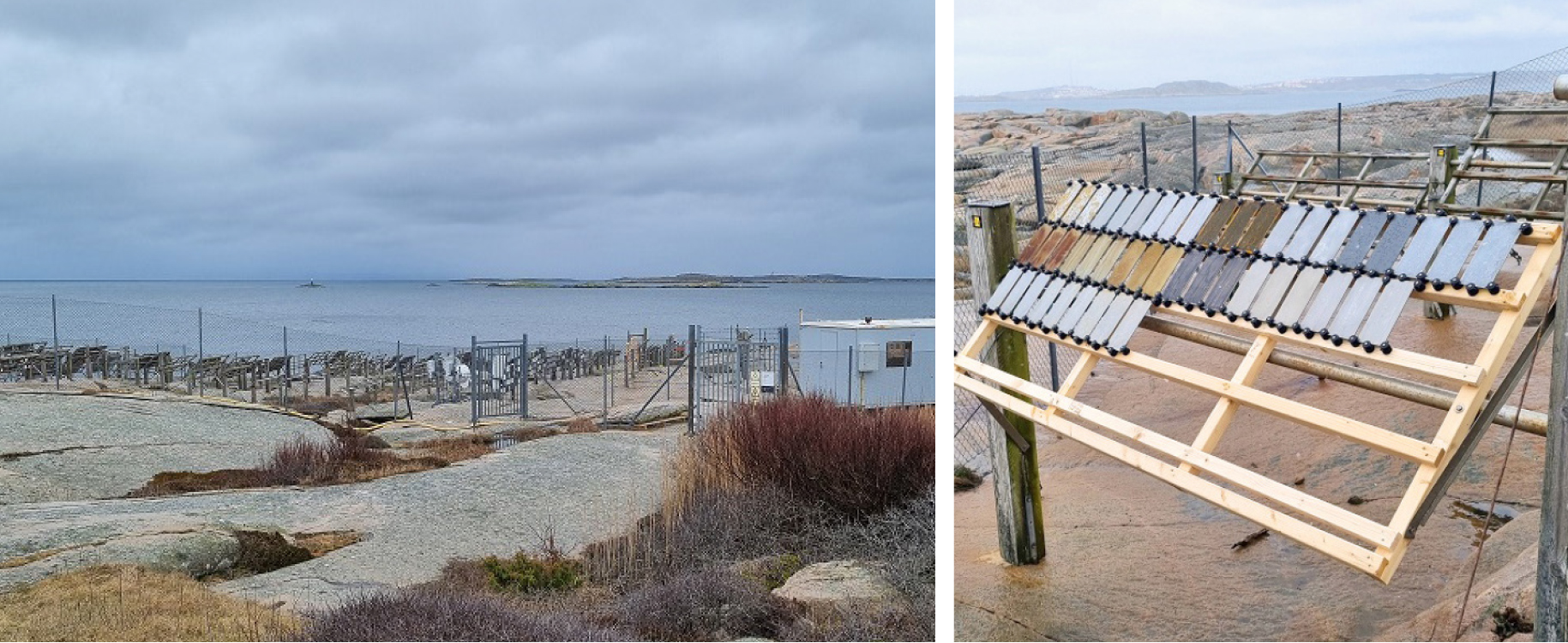
To validate performance under some of the most demanding conditions, we have carried out a long-term test on our test rig at RISE (Research Institutes of Sweden), on Bohus Malmön.
Test conditions
The rig is situated just 50 metres from the open sea in an environment classified as corrosivity class C5 (very high corrosivity). This means continuous and maximum exposure to:
– High humidity and frequent moisture cycles
– Salt particles and salt mist from the sea
– UV radiation and changing weather conditions
Test results after 18 months in an extreme environment
We recently carried out an inspection of the test panels after just over 18 months in this environment. The result was clear: The metal sheets showed no signs of corrosion.
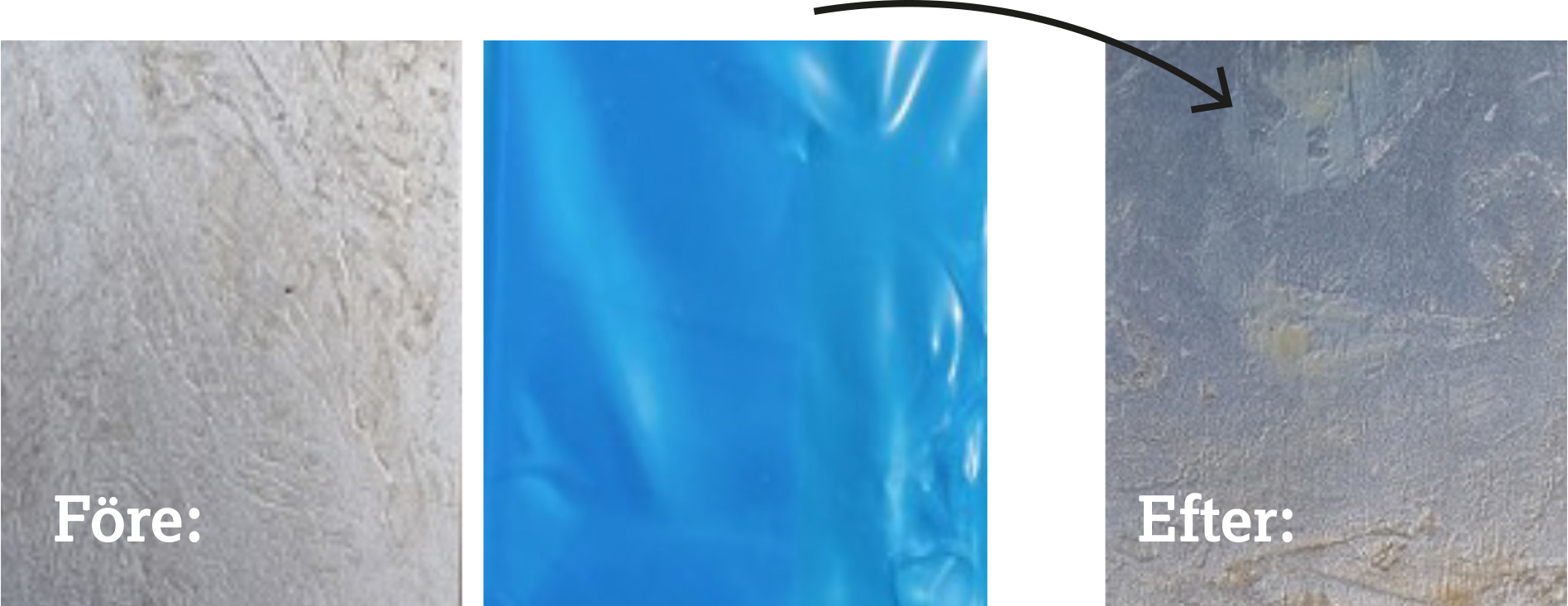
The combination of an outer diffusion-tight barrier and active contact and vapour phase protection has been shown to provide an extremely stable protective environment, even during prolonged periods of exposure.
How the anti-corrosion protection works
– Primer & contact protection (VpCI-369): An oil-based, semi-transparent coating forms a scratch-resistant and self-repairing film directly onto the metal surface. It is easily applied by spraying or brushing and can be removed effortlessly with an alkaline cleaning agent (such as VpCI-414) when the component is put into service.
– External physical protection (VpCI shrink film): A strong, UV-stabilised and hard-wearing heat-shrink film that is applied using heat to create a sealed and easy-to-handle wrapper around the entire piece of equipment.
By combining the right application techniques with tried-and-tested materials, we can help manufacturing and industrial companies secure the supply chain all the way to the end customer – without any unpleasant surprises when unpacking.
Would you like to find out more about our tests, or discuss the best way to protect your products against corrosion ahead of upcoming transport or outdoor storage? Please do not hesitate to get in touch with our technical expert Mats Gunnemyr.


