


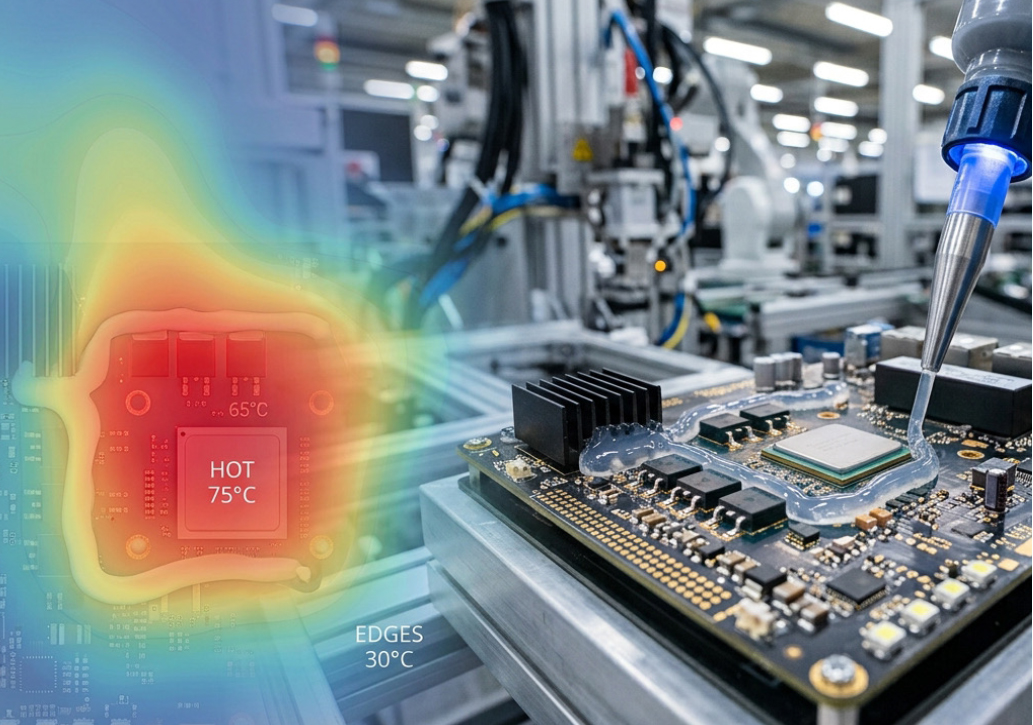
Electrification in industry is proceeding at a rapid pace. From control systems and building automation to vehicles and power electronics – more and more electronics are being squeezed into ever-smaller spaces. As components become more power-dense, a common challenge arises: extreme heat generation within a limited area. Without effective heat dissipation, there is a risk of reduced service life and costly downtime.
Despite this, the issues of potting, bonding and heat dissipation are often given the lowest priority in most development projects. This is entirely understandable – silicone often accounts for only a fraction of the total component cost. However, as power density increases in modern electronics, it is often precisely this that determines whether the product passes prototype testing or leads to costly customer complaints.
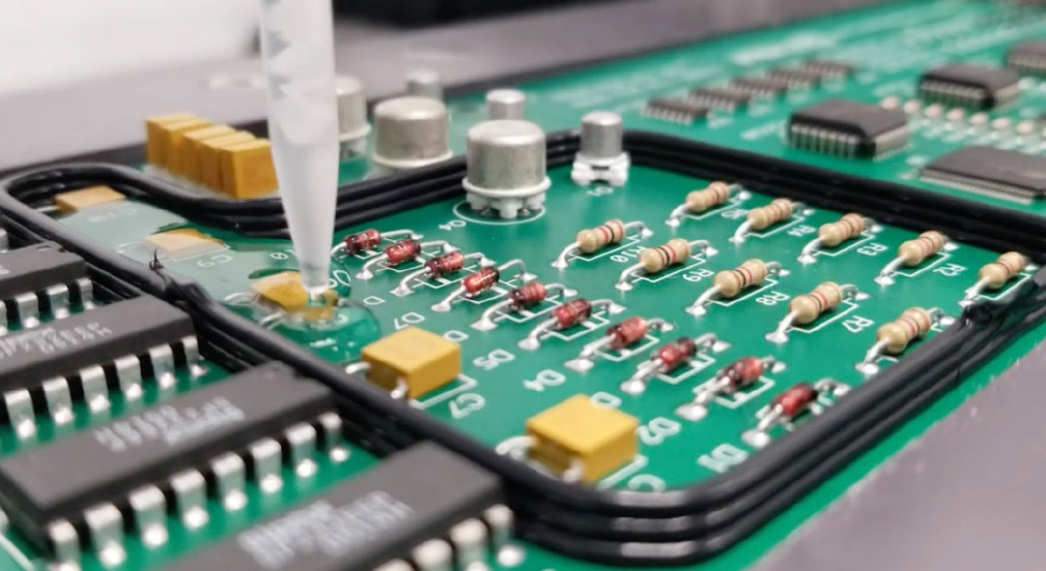
Don’t jeopardise the whole product over a detail like silicone
An incorrect choice of silicone material or a delayed curing process may lead to:
✓ Overheating and component faults: Heat is not being dissipated effectively from the components.
✓ Cracking and stress: The material cannot cope with thermal expansion caused by temperature fluctuations.
✓ Unnecessary production delays: Incorrect viscosity or curing mechanism causes bottlenecks on the production line.
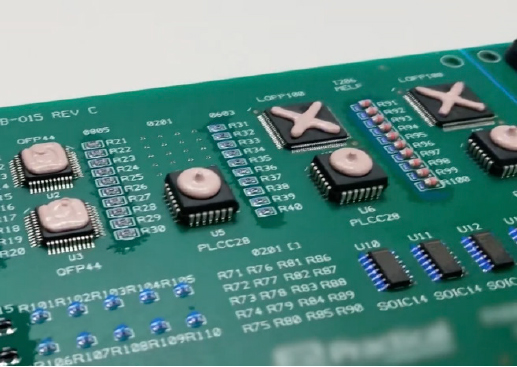
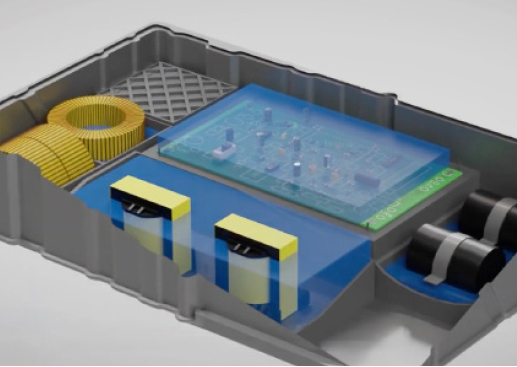
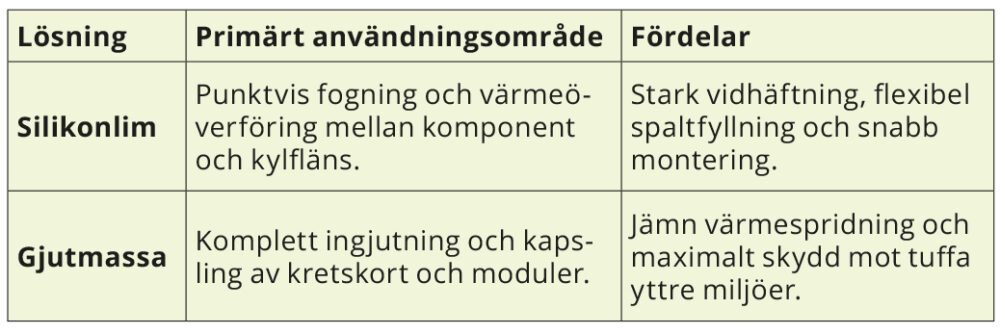
Casting compound or silicone adhesive – which is best suited to your application?
The right silicone solution ensures peace of mind for your product
By using the correct, suitable silicone adhesive or moulding compound for heat dissipation, you can ensure the product’s performance throughout its entire service life:
✓ High thermal conductivity: Efficient heat transfer directly from hot spots to the heat sink or casing.
✓ Permanent elasticity: Gentle strain relief that protects sensitive solder joints.
✓ Fully enclosed housing: Protection against moisture, chemicals, dust and vibrations in harsh industrial environments.


